Thursday, 31 May 2018

Need Help Prioritizing or Just Want To Feel More Balanced or Productive? Exploring the Ivy Lee Method

This article I am posting is directly from James Clear and was good enough to share directly with all of you.

I am providing the links to his site and other articles for those of you interested in this line of prioritization and methods or just looking for ideas to get your head out of the weeds and be more balanced and productive.
The Ivy Lee Method: 
The Daily Routine Experts Recommend for Peak Productivity
by James Clear
Link to JamesClear.com

By 1918, Charles M. Schwab was one of the richest men in the world.

Schwab was the president of the Bethlehem Steel Corporation, the largest shipbuilder and the second-largest steel producer in America at the time. The famous inventor Thomas Edison once referred to Schwab as the “master hustler.” He was constantly seeking an edge over the competition. [1]
One day in 1918, in his quest to increase the efficiency of his team and discover better ways to get things done, Schwab arranged a meeting with a highly-respected productivity consultant named Ivy Lee.
Lee was a successful businessman in his own right and is widely remembered as a pioneer in the field of public relations. As the story goes, Schwab brought Lee into his office and said, “Show me a way to get more things done.”
“Give me 15 minutes with each of your executives,” Lee replied.
“How much will it cost me,” Schwab asked.
“Nothing,” Lee said. “Unless it works. After three months, you can send me a check for whatever you feel it’s worth to you.” [2]

The Ivy Lee Method

During his 15 minutes with each executive, Lee explained his simple method for achieving peak productivity:
  1. At the end of each work day, write down the six most important things you need to accomplish tomorrow. Do not write down more than six tasks.
  2. Prioritize those six items in order of their true importance.
  3. When you arrive tomorrow, concentrate only on the first task. Work until the first task is finished before moving on to the second task.
  4. Approach the rest of your list in the same fashion. At the end of the day, move any unfinished items to a new list of six tasks for the following day.
  5. Repeat this process every working day.
The strategy sounded simple, but Schwab and his executive team at Bethlehem Steel gave it a try. After three months, Schwab was so delighted with the progress his company had made that he called Lee into his office and wrote him a check for $25,000.
A $25,000 check written in 1918 is the equivalent of a $400,000 check in 2015. [3]
The Ivy Lee Method of prioritizing your to-do list seems stupidly simple. How could something this simple be worth so much?
What makes it so effective?

On Managing Priorities Well
Ivy Lee’s productivity method utilizes many of the concepts I have written about previously.
Here’s what makes it so effective:
It’s simple enough to actually work. The primary critique of methods like this one is that they are too basic. They don’t account for all of the complexities and nuances of life. What happens if an emergency pops up? What about using the latest technology to our fullest advantage? In my experience, complexity is often a weakness because it makes it harder to get back on track. Yes, emergencies and unexpected distractions will arise. Ignore them as much as possible, deal with them when you must, and get back to your prioritized to-do list as soon as possible. Use simple rules to guide complex behavior.
It forces you to make tough decisions. I don’t believe there is anything magical about Lee’s number of six important tasks per day. It could just as easily be five tasks per day. However, I do think there is something magical about imposing limits upon yourself. I find that the single best thing to do when you have too many ideas (or when you’re overwhelmed by everything you need to get done) is to prune your ideas and trim away everything that isn’t absolutely necessary. Constraints can make you better. Lee’s method is similar to Warren Buffett’s 25-5 Rule, which requires you to focus on just 5 critical tasks and ignore everything else. Basically, if you commit to nothing, you’ll be distracted by everything.
It removes the friction of starting. The biggest hurdle to finishing most tasks is starting them. (Getting off the couch can be tough, but once you actually start running it is much easier to finish your workout.) Lee’s method forces you to decide on your first task the night before you go to work. This strategy has been incredibly useful for me: as a writer, I can waste three or four hours debating what I should write about on a given day. If I decide the night before, however, I can wake up and start writing immediately. It’s simple, but it works. In the beginning, getting startedis just as important as succeeding at all.
It requires you to single-task. Modern society loves multi-tasking. The myth of multi-tasking is that being busy is synonymous with being better. The exact opposite is true. Having fewer priorities leads to better work. Study world-class experts in nearly any field—athletes, artists, scientists, teachers, CEOs—and you’ll discover one characteristic runs through all of them: focus. The reason is simple. You can’t be great at one task if you’re constantly dividing your time ten different ways. Mastery requires focus and consistency.

The bottom line? Do the most important thing first each day. It’s the only productivity trick you need. [4]
 
FOOTNOTES
  1. Charles M. Schwab, the president of Bethlehem Steel, is not related to the American banking and brokerage magnate, Charles R. Schwab, who is the founder of the Charles Schwab Corporation. What are the odds that two unrelated men named Charles Schwab each end up with a personal net worth over $500 million? Pretty good apparently.
  2. It is unbelievable how hard it is to track down an original source for this story. Most stories incorrectly list the year of Lee and Schwab’s meeting as 1905 or so, but 1918 seems to be the accurate year as listed in pages 118-119 of “The Unseen Power: Public Relations: A History” by Scott M. Cutlip. Among the many books that mention reference this story are The Time Trap by R. Alec Mackenzie and Mary Kay: You Can Have It All by Mary Kay. The earliest reference I have tracked down for the story is from the 1960s. If you are aware of any earlier sources, please let me know and I will update this article accordingly.
  3. When calculating the equivalent value of a $25,000 check from 1918 in 2015 terms, I came up with results between $390,000 and $428,000 depending on which methods and numbers are used to calculate inflation. Thus, $400,000 seems like a reasonable middle ground.
  4. Thanks to UJ Ramdas who originally told me about the story of Charles M. Schwab and Ivy Lee. And to Cameron Herold, who shared the story with UJ.

Tuesday, 12 December 2017

Why Learning A New Language Makes You Smarter

Why Learning A New Language Makes You Smarter

from: Joe Desena December 12, 2017


I’ve been watching a lot of foreign movies with the subtitles on lately. I know, I know - I’m all about getting off the couch and being active, but hear me out. Watching movies with subtitles is a great way to learn a new language, especially for kids. So, if you’re going to turn Netflix on, make it worth your time!
A while back, I heard a podcast with Arnold Schwarzenegger where he discussed how he learned English. He watched a lot of movies and listened to a ton of music in English. By immersing himself in another language, he was able to become a fluent speaker. We too can learn a new language this way. 
Most of our interpretation of the world around us comes from our vocabulary. So it makes sense that we might understand the world a little better if we had more words in us. When you speak more than one language, your perception of the world actually increases. Your empathy for other cultures grows. 
As a parent, I think it’s important to teach our children a second language to succeed in our increasingly global world. Language exposes kids to a whole new culture, and it helps them have a better understanding of the world around them. Plus, it’s good for the brain! Research shows that learning a new language sharpens brain functions and increases creativity. Your brain expands when you learn another language. 
The easiest way to help your kids pick up a second language is to start early. That’s when their brains are nimble, and they can easily start absorbing a new language. Many bilingual families do just this. They teach their children to speak two languages at the same time. 
Of course, learning a language doesn’t have to be all work and no play. Immerse yourself and your kids in the culture of a new place as well! Watch movies, listen to music, grab some books in the foreign language you’re learning and go through them with the kids. 
What language should you start learning?
Right now, my family is practicing Mandarin. It’s a great language to learn, and we’re having a lot of fun as we discover new words and their meanings. And, with close to 1.3 billion people around the world being native Mandarin speakers, learning the language will allow my kids, my wife and me to connect with many more individuals than we ever could have beforehand.
We’re not alone, either. Lots of entrepreneurs are seeing the benefits of learning Mandarin. When Mark Zuckerbergdelivered a speech and answered questions in Beijing a few years ago, he did so entirely in Chinese. While his pronunciation and grammar weren’t perfect, he made an effort to connect with his audience, and it made all the difference. 

Of course, learning any language is a huge advantage in today’s world. It will allow you and your children to interact with others at a deeper level, and to experience the world in an entirely new way.

Monday, 9 May 2016

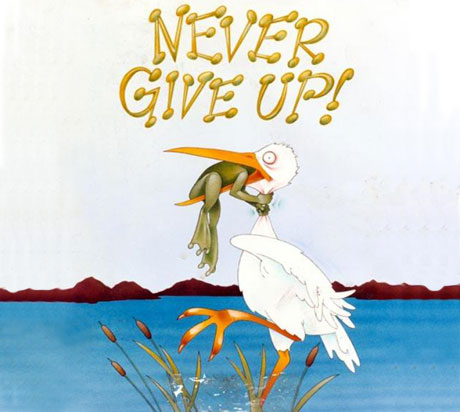
One more round - Don't Give Up

Don't Give Up!
I recently came across this write up on a university website and found it relevant for the people who follow my blog.

“Our greatest weakness lives in giving up. The most certain way to success is trying one more time.”

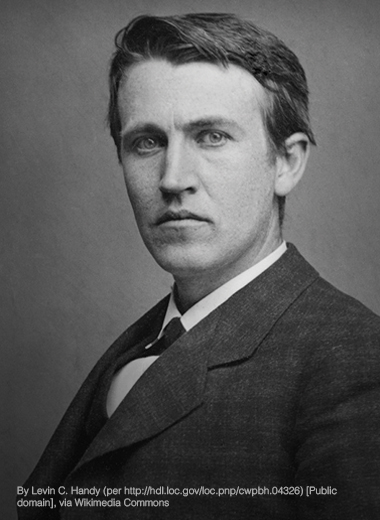
Failure is no biggie. Just ask Edison. If he stopped at failure, he would never have moved on to invent a little thing called the light bulb. Or the phonograph. Or the motion picture camera. We pretty much owe Edison for movies, music and lights. Thank goodness he pressed on!

Young Edison only had three months of traditional schooling. Not because he was brilliant, but because his mind often wandered and his teacher thought him to be “addled.” His unique path to learning came from his mother, who schooled him at home and nursed him through what ended up being lifelong hearing problems. Despite the challenges, he went on to change the world.
What’s stopping you from your dream? Maybe you failed a class somewhere else. Or a scheduling conflict is messing with your plans.  

Talk about a light bulb moment!


~Thomas Edison, Relentless Inventiveness~


Need help? Let me help coach you through to your next level of success. Take the first step and reach out to me by email or phone

Shark or Goldfish?

I am sharing another article I received from Drago Adams and his Monday Motivator.  I hope you enjoy and it brings perspective to you as it did for me.

If you are facing a challenge and anxious about your situation, I know how you feel. I lost my job in 2001 during the dot.com bust. The company was losing money faster than we could raise it and eventually the company sank faster than the Titanic.
I thought it was the worst event of my life. I was two months away from being bankrupt. I had a wife, two young children, a mortgage, no health insurance, and very little savings. I was a paycheck away from losing it all.
It sounds bad. It felt bad. At the time it was bad. But one day I decided that I wasn’t going to let this challenge take me down. And that’s when I knew I had to change what I was thinking and doing.
I read a few books including Who Moved My Cheese and Rich Dad, Poor Dad which helped me make some important decisions through the change. Eventually these decisions would lead to the work I do now as a writer, consultant, and speaker.
My layoff led to my life’s mission and purpose. What I thought was the worst event in my life actually lead to the best. I’m not alone. Gallup did a study and asked people to identify the worst and best event of their life. They found that there was an 80% correlation between the two events.
There was also a British study of 500 “charmed” people. They seemed to have it all; wealth, success, great relationships, etc. The researchers were surprised to discover that every one of these “charmed” people had bad things happen to them. They all experienced challenges and adversity, however, each one of them turned the bad into good and their misfortune into fortune.
The truth is that challenges and change are a part of life. The waves of change are always coming our way. But when the wave hits we have a choice. We can embrace it and ride it to a successful future or resist it and get crushed by the wave.
Embracing our waves of challenge and change is all about how we perceive and respond to the events we face. In The Shark and the Goldfish I share the positive success formula.
E + P = O
We can’t always control the (E) vents in our life but we can control our (P)ositive response to these events and this often determines the (O)utcome.
When the change hits instead of focusing on the challenge we can choose to look for the opportunity. We can ask what this event is teaching us and identify how we can grow stronger and wiser from it. We can live in fear or move forward with faith and take positive action.
We can decide to be a Shark instead of a Goldfish? Goldfish become paralyzed by fear. They stay in their comfort zone and wait for someone to feed them. On the other hand Sharks (nice sharks) move forward with faith and take action. They trust that their best days are ahead of them, not behind them. Instead of waiting to be fed they venture out in the ocean of possibility in search of food. Their beliefs and actions create a self-filling prophecy; because they expect to find food and take action to find it, they do.
Shark or a Goldfish? Which will you choose to be?

Monday, 23 November 2015

A Useful Life (Drago Adams from The Monday Motivator)

When you are 80 years old, sitting in your porch rocking chair and reflecting on life, questions such as Did I live a useful life? will cross your mind. There’s no doubt this question will be important to you at 80, so it really should be important to you now.
Unfortunately, a lot of people make a habit of postponing life. They think that somehow, some way, somewhere at some time, life will get better. This rather poignant saying helps illustrate my point:
First I was dying to finish high school and start college. And then I was dying to finish college and start working. And then I was dying to marry and have children. Then I was dying for my children to grow old enough so I could return to work. Then I was dying to retire. And now I am dying and suddenly realize I forgot to live.
Isabel Moore said, “Life is a one-way street. No matter how many detours you take, none of them leads back. And once you know and accept that, life becomes much simpler.”
I’ve understood for some time that the only day I have is today. Even so, having a heart attack a few years ago crystallized that concept in my mind. Life is a one-way street. This isn’t a dress rehearsal—it’s a live performance.
We need to take special care to live a useful life, starting now.
So what does it mean to live a useful life? For me, the usefulness of my life is determined by:
•    The relationships I form
•    The decisions I make
•    The experiences I encounter
The Relationships I Form

Relationships help us define who we are and what we can become. More than almost anything else, relationships determine the kind of a life you lead. In fact, most people can trace their failures or successes back to pivotal relationships.
Our relationships with others fall into one of four categories:
1. Addition—Some relationships add to who we are.
2. Subtraction—Some relationships take a little bit out of us.
3. Multiplication—Some relationships can multiply our strengths, results and contacts.
4. Division—Some relationships can divide us.
Think about the people in your life. Where do they fit into these categories? I’m sure it wouldn’t take long to put names beside each category, right? Many of the sorrows we experience spring out of relationships with the wrong people. But it is also true that some of the greatest joys we experience in life develop as the result of our relationships with the right people. With that in mind, work to increase the time and energy you invest in the relationships that improve your life.
And, perhaps above all, work on becoming a person who improves others’ lives.
The Decisions I Make

Our decisions also determine the usefulness of our lives. One of my favorite quotes on making decisions comes from the great John Wooden, who said, “Make each day your masterpiece.”
There are two ingredients necessary to make every day a masterpiece: decisions and discipline. Decision-making takes care of goal setting, but discipline also takes care of goal-getting. Decisions and discipline can’t be separated; one is worthless without the other.
Since I’m talking about living a useful life, let me share what I consider to be a few of my own life-changing decisions.

• I am committed to continual personal growth. I believe growth is happiness, it is essential. Out of my growth I live, and out of my growth, I give.

• I will give and serve on the front end. Many of the blessings I enjoy today are the result of the decision my wife, Margaret, and I made to try to live a life of giving with no strings attached.

• I will exhibit a great attitude, regardless of the situation.
Virginia Satir said, “Life is not the way it’s supposed to be. It’s the way it is. The way you cope with it is what makes the difference.” It’s not the circumstances life deals us that determine our success or failure. It’s our response to it.
The Experiences I Encounter

Finally, the experiences we encounter on a daily basis impact our ability to live a useful life. Joseph Campbell put it best, “People say that what we’re all seeking is meaning for life…. I think that what we’re seeking is an experience of being alive.”
Our experiences determine how fulfilling our life is, and there are four realms to every experience:
1. Entertainment—Absorbing experience through the senses
2. Educational—Participation of a person’s mind or body, sometimes both
3. Escapist—Completely involves the person, like going to a theme park
4. Esthetic—Immersion in an environment but not affecting it
Jim Gilmore was spot-on when he said, “The richest and most compelling human experiences draw from all four realms.” If you are a leader or a communicator, ask yourself: When I am communicating with or leading people, do I involve all four experiences?
Final Thoughts
If you’re not doing something with your life, it doesn’t matter how long it is. If you’re doing something with your life, it doesn’t matter how long it is. Life does not consist of years lived, but of its usefulness.
If you are giving, loving, serving, helping, encouraging and adding value to others, you have a useful life!

Tuesday, 3 November 2015

How Successful People Set Goals and Follow Through

As many of you know I am all about goal setting and increasing performance and results while improving team cohesion and personal well-being.  This recent article and blog post is a great perspective from the world's number 1 Executive Coach Marshall Goldsmith. 

This is the link to the youtube video on the subject and below has a write up and narrative to bring perspective and learning. https://www.youtube.com/watch?v=k9-VOHw9lCc


The typical advertisement or “infomercial” – designed to help people “get in shape” – provides a great example of what not to do in goal-setting. The message is almost always the same, “For an ‘incredibly small’ amount of money – you can buy a ‘revolutionary’ product – that is ‘unbelievably easy’ and ‘fun to use’. This product will produce ‘amazing results’ ‘in almost no time’ and you will ‘have the body that you always wanted’.” Most infomercials imply that you will not have to continue exercising and dieting for years – that you will continue to look young – and that you will have frequent, wonderful sex for the rest of your life.
In reality there is no “easy answer” – real change requires real effort. The “quick fix” is seldom a “meaningful fix”. Distractions and competing responses are going to happen and the most successful people, and those who really want to be great, understand this.
Below are three of the most important reasons that people give up on goals followed by a brief description of how successful people “do it differently” and are ultimately well-positioned to achieve their goals.
  1. OwnershipOne of the biggest mistakes in all of leadership development is the roll-out of programs and initiatives with the promise that “this will make you better”. A classic example is the performance appraisal process. Many companies change their performance appraisal forms on a regular basis. How much good does this usually do? None! These appraisal form changes just confuse people and are seen as annual exercises in futility. What companies don’t want to face is the real problem – it is seldom the form – the real problem is the managers who lack either the courage or the discipline to make the appraisal process work. The problem with the “this will make you better” approach is that the emphasis is on the “this” and not the “you”.
    Rather than rely on the latest “program,” successful people have a high need for and reliance upon self-determination. They commit to the challenge, task, or process that needs their efforts and make a plan to meet their goals. Because of this commitment, they are far more likely to achieve success.
  2. TimeMost of us have a natural tendency to underestimate the time needed to reach targets. Everything seems to take longer than we think that it should! When the time elapsed in working toward our goal starts exceeding expectations, we are tempted to just give up on the goal, and often do.
    Successful goal-setters are more time-sensitive than the general population. They are more realistic about the time it will take them to implement and complete various changes and/or tasks. In addition, they review their goals frequently and adjust their plans for progress as necessary. Thus, they are more likely to meet their own goal expectations.
  3. DifficultyThe gripe with difficulty is, “The challenge, process, or task is a lot harder than I thought it would be. It sounded so simple when I was starting out!”
    In setting goals it is important that we realize that real change will take real work. Expecting that “this will be easy” and “this will be no problem for me” can backfire in the long-term when we realize that change is not easy and that we will invariably face some problems in our journey toward change.
    Successful people understand that there will be a price for success – they will have to work hard to achieve their goals. This realistic outlook prevents the disappointment that can occur when challenges do arise later in the change process – and as a result they are less likely to give up.
All of these messages may sound “tough”, but they are real. Successful people are not afraid of challenging goals. In fact – clear, specific goals that produce a lot of challenge – tend to produce the best results!
 
Taken from: http://www.marshallgoldsmithfeedforward.com/marshallgoldsmithblog/?p=1082&utm_source=03+CBC+Full&utm_campaign=03+CBC+-+Full&utm_medium=email
Posted on by Coach Marilyn

Monday, 28 September 2015

Do it Scared!

Fear can be crippling for most of us but it need not be.  

So how do you step up and move past the fear and go to those heights you aspire? It’s simple: do the things that others aren’t willing to do.

Whether you’re a leader, a team member, or a candidate, success comes from having the discipline to do the things that you know you should be doing, even when you don’t feel like doing them. When you practice this kind of self-discipline regularly, you’ll naturally stand out from the pack—because most people avoid the hard stuff. It’s just easier to put it off.
But the truth is that what feels easy now creates problems down the line. And what feels hard now—doing the stuff you don’t feel like—makes everything easier in the long-term. Self-discipline doesn’t have to be hard—you just have to change the way you think about it.

Successful people have mastered the art of self-discipline. I’ve spent the last 10 years studying and coaching some of the most successful people in business, figuring out what makes them different. They’re not smarter or more talented than the average person—they just consistently do what others aren’t willing to do by keeping three principles in mind:
Do it scared. 
Fear is one of the biggest saboteurs of our goals, because it inhibits action. The next time you feel yourself putting something off because you’re afraid—of uncertainty or failure—just “do it scared.”
I once heard a true story of a woman who was trapped in a burning building on the 80th floor. She was terrified of heights and enclosed spaces, and when the fire alarm went off, she refused to follow her colleagues into the stairwell to evacuate to safety.
The firemen did a sweep of the building and found her hiding under her desk, waiting to die. She was screaming “I’m scared, I’m scared!” as the firemen insisted she walk down the stairwell until one fireman said, “That’s OK, just do it scared.” He repeated it all the way down the 80 flights of stairs, until he brought her to safety.
We’ve all faced these moments in our careers—when you know what has to be done, but your fear holds you back. In order to stand out, you must develop the habit of acting in the face of fear. It’s fine to be scared—do it scared. It’s fine to be unsure—do it unsure. It’s fine to be uncomfortable—do it uncomfortable. Just do something.
This is the attitude of the most disciplined and successful people on the planet. They might be scared, but they do it anyway. And by just doing something, you create movement and momentum that will lead to progress and results.
Habits, not results.
Perfectionism is one of the most common reasons people procrastinate, and we’ve all done it at some point.
The best way to overcome this impulse is to put your self-esteem into stellar work habits instead of results. It can take a while to see the fruits of your labor—whether you’re spearheading a new initiative, trying to launch a business, or planning a second act career. To keep yourself motivated, take pride in sticking to your work habits, rather than looking for immediate results. In time, success will follow.
Remember the big picture.
The pursuit of any goal will inevitably face a number of obstacles. The difference between those who stand out in their careers and those who blend in lies in what you do when you reach these critical turning points. Do you hesitate and turn back? Or do you press forward? When you feel frustrated, depressed, or disappointed, don’t give up—just get some perspective.
I have a mental reminder that helps me push past these hurdles. I hold my pen up to my eye and stare directly down the barrel. Then, I pull it away and look at it in its entirety. It’s a quick way to remind myself to look at my life in the same way.
Stop fixating on the here and now, and think about the big picture. Today’s challenges may not make sense, but you must have faith that over the long term, they will be nothing more than blips on the radar screen. Having this perspective and faith will help you press forward at the moments when others turn back.
Contrary to popular belief, people who have reached the highest levels in their careers aren’t necessarily better educated, more talented or better connected. Neither are they simply more motivated or harder workers. Rather, successful people have realized that getting to the top means that they first have to do the things that they don’t want to do related to their goals.
It’s not about enjoying self-discipline—it’s about adopting a few new ways of thinking that simply make discipline easier to endure. And when you develop the habit of doing things that others won’t do, you’re putting yourself on the fast track to the route to the top.

Thanks to Drago Adams for his contribution to the content of this article.